Importance of Modular Junction Testing
In modular implant systems, the modular junction is typically designed in a tapered configuration. While this type of connection offers several advantages, including design flexibility and ease of assembly, insufficient mechanical strength may lead to junction failure, increased wear, release of metallic debris, and even clinical failure of the implant.
Therefore, performing standardized modular junction testing is essential for verifying design quality, controlling the manufacturing process, and providing regulatory documentation.
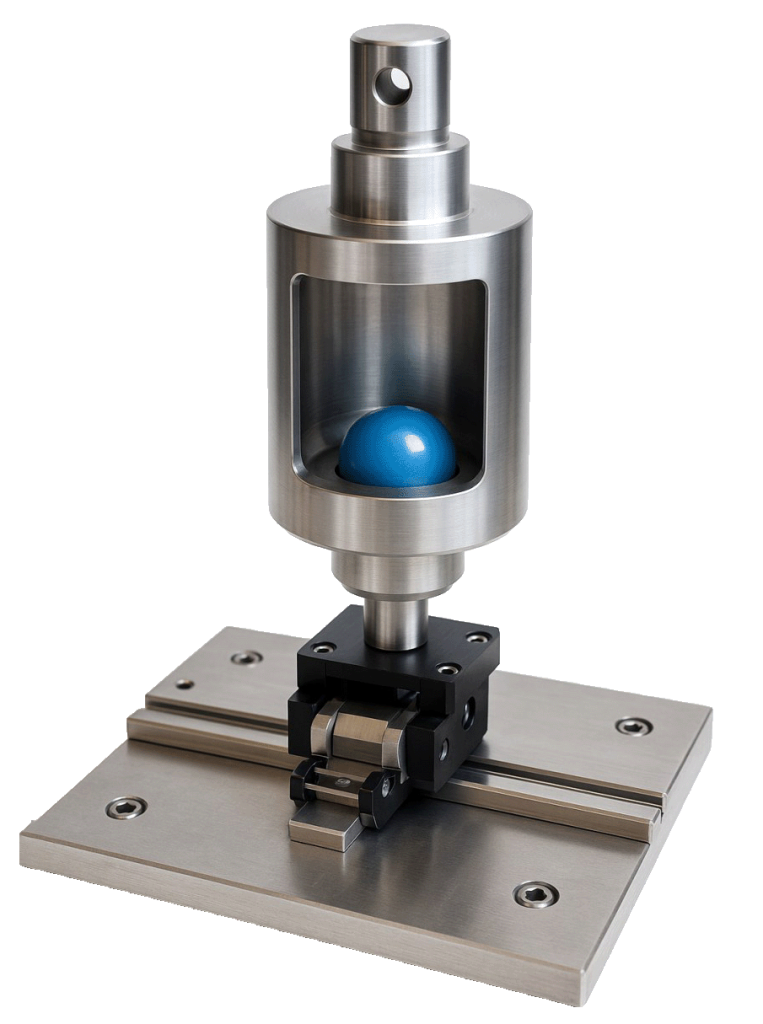
Modular Junction Testing Based on ASTM F2009
استاندارد ASTM F2009 روش مرجع برای انجام آزمون جداسازی اتصال مدولار در انواع پروتزهای ارتوپدی است. این استاندارد، نحوه اعمال بار محوری کششی و اندازهگیری نیروی لازم برای جداسازی اتصال مدولار مخروطی را تشریح میکند.
آزمون اتصال مدولار مطابق ASTM F2009 برای موارد زیر کاربرد دارد:
- پروتزهای مدولار مفصل ران (Hip Implants)
- سیستمهای مدولار شانه (Shoulder Implants)
- سایر ایمپلنتهای ارتوپدی دارای اتصال مدولار مخروطی
ISO 7206-10 has been specifically developed to evaluate the modular junction of femoral heads in hip joint prostheses. This test assesses the resistance of the modular connection to static loading and tensile disassembly forces. The results of this test indicate whether the modular junction between the femoral head and the stem possesses sufficient mechanical strength for clinical use.
کاربردهای آزمون اتصال مدولار
اجرای آزمون اتصال مدولار مطابق ASTM F2009 و ISO 7206-10 در موارد زیر ضروری است:
- ارزیابی استحکام و پایداری اتصال مدولار
- مقایسه طراحیهای مختلف اتصال مدولار
- کنترل کیفیت ایمپلنتهای ارتوپدی مدولار
- پشتیبانی از پروندههای فنی و مستندات CE و FDA
- کاهش ریسکهای بالینی مرتبط با جدایش اتصال مدولار
Conclusion
آزمون اتصال مدولار یکی از آزمونهای کلیدی در تضمین ایمنی و عملکرد ایمپلنتهای ارتوپدی مدولار است. انجام این آزمون بر اساس استانداردهای معتبر بینالمللی، نقش مهمی در افزایش اعتماد بالینی، کاهش عوارض و ارتقای کیفیت محصولات پزشکی ایفا میکند.



 Persian
  English
  Arabic