
- Home
- About Us
- Contact Us
- Submit Request
- Tests
- Biocompatibility Testing
- Ethylene Oxide Residuals Testing
- General – Microbiological Tests
- Atomic Absorption Testing
- Accelerated Stability Testing
- Specialized Medical Device Testing
- Analytical Testing
- Packaging Tests
- Catalog
- Laboratory
- Specialized Microbiological Testing
- Antimicrobial Performance Evaluation
- Molecular Testing
- Heavy Metals Testing
- Orthopedic Testing
- Home
- About Us
- Contact Us
- Submit Request
- Tests
- Biocompatibility Testing
- Ethylene Oxide Residuals Testing
- General – Microbiological Tests
- Atomic Absorption Testing
- Accelerated Stability Testing
- Specialized Medical Device Testing
- Analytical Testing
- Packaging Tests
- Catalog
- Laboratory
- Specialized Microbiological Testing
- Antimicrobial Performance Evaluation
- Molecular Testing
- Heavy Metals Testing
- Orthopedic Testing


- Home
- About Us
- Contact Us
- Submit Request
- Tests
- Biocompatibility Testing
- Ethylene Oxide Residuals Testing
- General – Microbiological Tests
- Atomic Absorption Testing
- Accelerated Stability Testing
- Specialized Medical Device Testing
- Analytical Testing
- Packaging Tests
- Catalog
- Laboratory
- Specialized Microbiological Testing
- Antimicrobial Performance Evaluation
- Molecular Testing
- Heavy Metals Testing
- Orthopedic Testing
Mycoplasma Detection Test (PCR): A Rapid and Reliable Approach for Monitoring Mycoplasma Contamination
What Is Mycoplasma and Why Is It Important
Mycoplasmas are a group of extremely small bacteria that lack a cell wall, and due to this characteristic, they are intrinsically resistant to antibiotics that target cell wall synthesis, such as penicillins. These microorganisms exhibit slow growth in conventional culture systems and often remain undetected, as they do not cause turbidity or visible changes in cell culture media. Mycoplasma contamination can significantly affect cell growth, gene expression, metabolism, and experimental outcomes, ultimately leading to unreliable data. Therefore, mycoplasma detection is considered one of the most critical control measures in cell culture laboratories and biotechnological industries.
Why Is Continuous Mycoplasma Detection and Monitoring Essential
In the production of biological products, vaccines, and other biopharmaceuticals, as well as in work involving research and industrial cell lines, the risk of mycoplasma contamination is always present. Such contamination may be introduced through biological raw materials, sera, culture media, or even inadequate aseptic practices. For this reason, continuous and well-planned mycoplasma detection, in accordance with international reference standards such as Ph. Eur. 2.6.7, USP, and ICH guidelines, is considered mandatory or strongly recommended as an integral part of the quality control system.
Common Methods for Mycoplasma Detection
For the detection of mycoplasma contamination, various methods are available, each with its own specific applications and limitations.
Specific Mycoplasma PCR
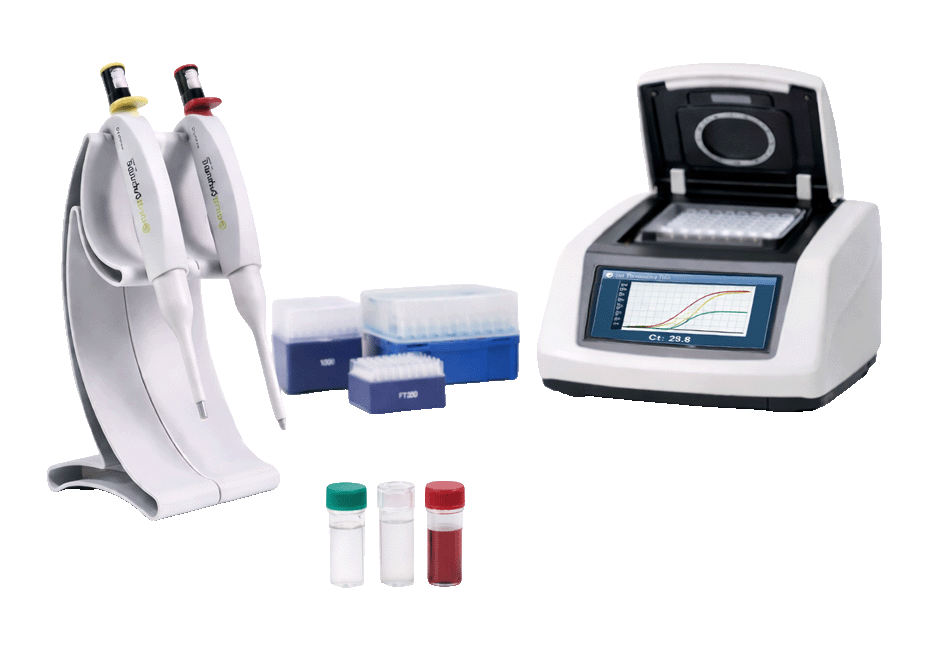
PCR is one of the most widely used and effective methods for mycoplasma detection. This molecular assay identifies mycoplasma and acholeplasma DNA using specific primers. Due to its high sensitivity and specificity, PCR is well suited for routine screening of cell cultures. It should be noted that PCR detects the presence of DNA and does not distinguish between viable and non-viable organisms; therefore, interpretation should consider regulatory requirements related to viability.
Mycoplasma Culture Method
Culture-based testing is considered the reference method for confirming mycoplasma viability. However, it is time-consuming and may require several days to weeks to obtain results. As a result, it is often used as a confirmatory test following molecular detection.
Fluorescent Staining (DAPI/Hoechst)
Fluorescent staining techniques serve as qualitative, supportive methods for rapid evaluation of mycoplasma contamination in cell cultures, but they are not sufficient as standalone regulatory tests.
Advantages of PCR-Based Mycoplasma Detection
PCR-based mycoplasma detection offers high sensitivity and specificity and targets the most common contaminating species responsible for the majority of reported cases. The short turnaround time enables rapid decision-making regarding the continuation of cell culture work or batch quarantine. Additionally, this method is well suited for periodic monitoring of cell lines and biological raw materials.
Sample Types and Testing Conditions
Acceptable samples for mycoplasma detection include cell culture supernatants, cell pellets, spent or control culture media, and selected biological raw materials. The recommended sample volume depends on the matrix and typically includes 1–2 mL of supernatant or approximately 10⁶–10⁷ cells. Samples should be transported and stored under refrigerated conditions (2–8°C), and repeated freeze–thaw cycles should be avoided. Supporting information such as cell line origin, antibiotic usage, and the time of the last medium change is essential for accurate interpretation.
Reporting, Interpretation, and Limitations
PCR results are reported as “positive” or “negative” together with appropriate quality controls, including internal extraction and amplification controls. In the case of positive PCR results, confirmatory culture testing may be recommended to assess organism viability, depending on regulatory requirements. The limit of detection (LOD) is defined according to internal method validation. Potential limitations include PCR inhibitors, detection of non-viable DNA, or low contamination levels; therefore, repeat testing in accordance with the SOP may be necessary.
Recommended Monitoring Frequency
For routine cell culture work, mycoplasma detection is recommended every 4–6 weeks or prior to sharing or transferring cell lines. In biological and vaccine manufacturing, testing frequency should be defined based on the quality control strategy and regulatory dossier requirements.
 Persian
  English
  Arabic