


Molecular Detection of Mycoplasma by PCR
Introduction to Mycoplasma PCR Test
Mycoplasma molecular testing by PCR is one of the most important and widely used methods for detecting mycoplasma contamination in cell cultures, biological products, and medical devices. Mycoplasmas are extremely small bacteria lacking a cell wall, which allows them to pass easily through standard filters and grow in culture media without causing turbidity or visible changes. This characteristic often leads to delayed detection of contamination and can result in significant scientific, quality, and economic losses.
Why Is Mycoplasma Screening Essential?
The presence of mycoplasma in cell cultures can slow cell growth, alter metabolic pathways, affect gene expression, and severely distort biological responses. As a result, laboratory data, research outcomes, and quality control test results may become unreliable or misleading. For this reason, routine mycoplasma screening in biotechnology, biopharmaceutical manufacturing, and medical device production—especially for aseptic products—is considered a critical requirement within GMP and ISO 13485 frameworks.
Advantages of PCR for Mycoplasma Detection
Mycoplasma PCR testing, due to its high sensitivity and rapid turnaround time, serves as a powerful alternative or complementary method to traditional culture-based assays. This technique can detect very low levels of mycoplasma DNA, with limits of detection typically ranging from 10 to 100 CFU/mL depending on the kit and protocol used. The use of highly specific primers and probes—most commonly targeting conserved regions of the 16S rRNA gene—ensures high assay specificity and minimizes the risk of false-positive results.
Turnaround Time and Sample Applicability
One of the key advantages of PCR-based mycoplasma detection is its speed. Unlike culture methods, which may require several days to weeks, PCR results are typically available within 3 to 6 hours following DNA extraction. This rapid response makes PCR an ideal tool for timely decision-making, including product release, batch quarantine, and routine monitoring of manufacturing lines. Moreover, PCR assays are applicable to a wide range of samples, including cell culture supernatants, raw materials, culture media, sera, and in-process samples.
Types of Mycoplasma PCR Assays
Conventional PCR (End-point PCR)
This method is commonly used for routine screening. Results are interpreted based on the presence of a specific amplification band visualized by agarose gel electrophoresis.
Real-Time PCR (qPCR)
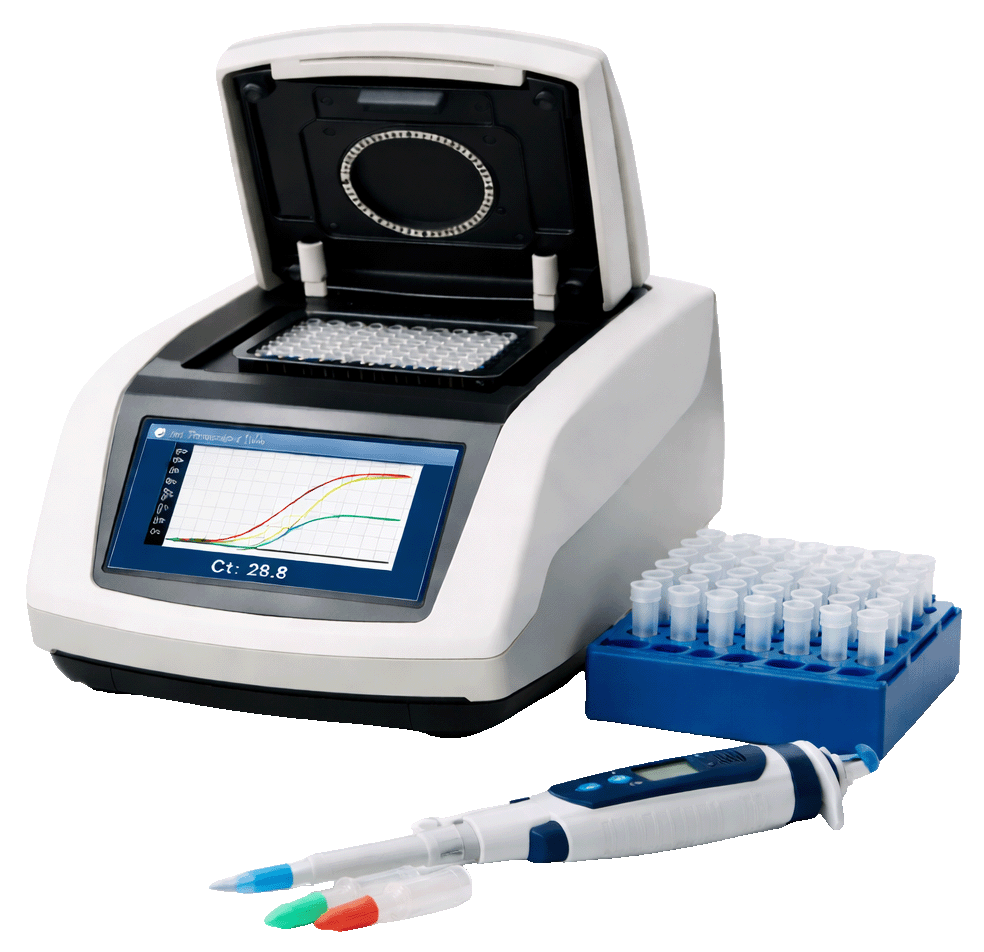
qPCR enables quantitative or semi-quantitative detection of mycoplasma based on cycle threshold (Ct) values, providing a more precise assessment of contamination levels. This method is particularly suitable for manufacturing environments and rapid product release.
Multiplex PCR
Multiplex PCR allows the simultaneous detection of multiple common mycoplasma species or genera—such as Mycoplasma orale, Mycoplasma hominis, Mycoplasma arginini, and Acholeplasma—within a single reaction.
Technical Requirements and Controls in Mycoplasma PCR Testing
Proper assay design is essential to ensure the reliability of mycoplasma PCR results. The inclusion of positive controls, negative controls, no-template controls (NTC), and internal amplification controls (IAC) is mandatory. In addition, strict measures to prevent amplicon contamination—such as unidirectional workflow, physical separation of pre-PCR and post-PCR areas, use of filtered pipette tips, and dUTP/UNG systems—are critical for maintaining assay integrity.
Regulatory Perspective on Mycoplasma PCR Testing
According to the European Pharmacopoeia (Ph. Eur. 2.6.7), USP , and the Japanese Pharmacopoeia (JP), PCR-based mycoplasma testing may be used as a rapid method in combination with compendial reference assays, such as culture or indicator cell methods. Integrating PCR testing into an Environmental Monitoring Program (EMP) and the overall quality assurance system plays a key role in minimizing contamination risks and ensuring product safety.
Final Summary
Mycoplasma molecular testing by PCR—particularly qPCR—is a rapid, sensitive, and reliable method for detecting mycoplasma contamination in cell cultures and biological products. When properly validated and correctly interpreted, this method represents one of the fundamental pillars of quality control in modern biotechnological and medical manufacturing environments.
 Persian
  English
  Arabic