
- Home
- About Us
- Contact Us
- Submit Request
- Tests
- Biocompatibility Testing
- Ethylene Oxide Residuals Testing
- General – Microbiological Tests
- Atomic Absorption Testing
- Accelerated Stability Testing
- Specialized Medical Device Testing
- Analytical Testing
- Packaging Tests
- Catalog
- Laboratory
- Specialized Microbiological Testing
- Antimicrobial Performance Evaluation
- Molecular Testing
- Heavy Metals Testing
- Orthopedic Testing
- Home
- About Us
- Contact Us
- Submit Request
- Tests
- Biocompatibility Testing
- Ethylene Oxide Residuals Testing
- General – Microbiological Tests
- Atomic Absorption Testing
- Accelerated Stability Testing
- Specialized Medical Device Testing
- Analytical Testing
- Packaging Tests
- Catalog
- Laboratory
- Specialized Microbiological Testing
- Antimicrobial Performance Evaluation
- Molecular Testing
- Heavy Metals Testing
- Orthopedic Testing


- Home
- About Us
- Contact Us
- Submit Request
- Tests
- Biocompatibility Testing
- Ethylene Oxide Residuals Testing
- General – Microbiological Tests
- Atomic Absorption Testing
- Accelerated Stability Testing
- Specialized Medical Device Testing
- Analytical Testing
- Packaging Tests
- Catalog
- Laboratory
- Specialized Microbiological Testing
- Antimicrobial Performance Evaluation
- Molecular Testing
- Heavy Metals Testing
- Orthopedic Testing
Bioburden Validation
Definition and Purpose of Bioburden Validation
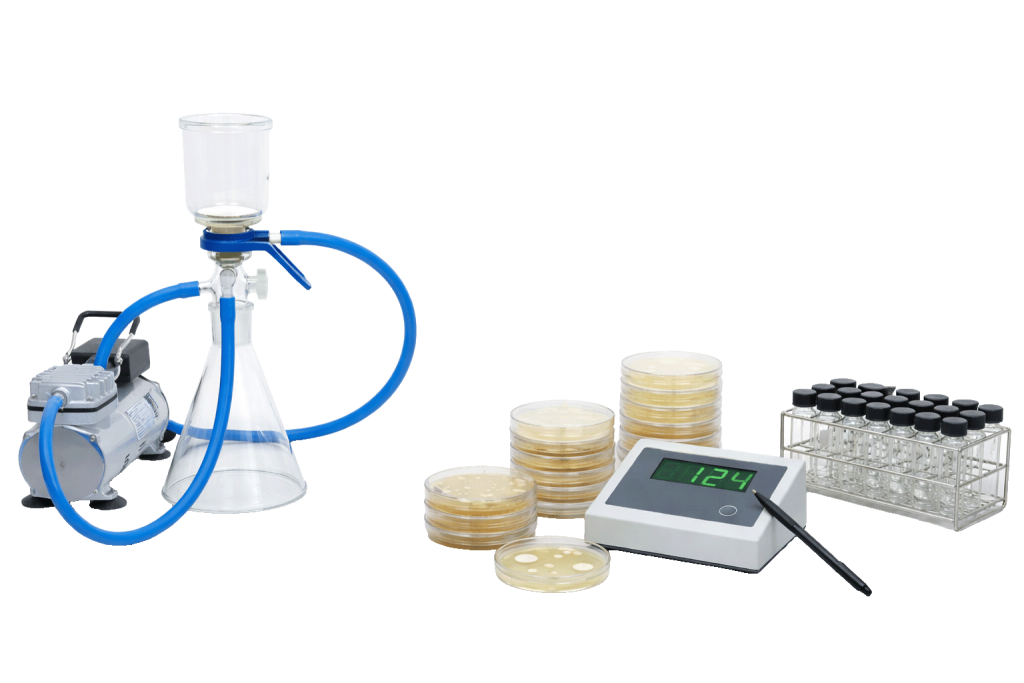
Bioburden Validation is a documented and systematic process performed in accordance with the requirements of the international standard ISO 11737-1, with the objective of demonstrating the capability and effectiveness of the bioburden testing method.
Through this process, the population of viable microorganisms present on the surface or within medical devices, raw materials, components, or packaging materials is determined in a repeatable, reliable, and traceable manner.
Data generated from bioburden validation are used for:
- Determining appropriate sterilization doses or parameters
- Validation of sterilization processes
- Routine monitoring and performance assessment of sterilization effectiveness
Importance of Bioburden Validation
Bioburden validation is a key requirement within medical device quality management systems and plays a critical role in:
- Determining the true level of microbial contamination prior to sterilization
- Providing scientific support for establishing the Sterility Assurance Level (SAL)
- Identifying potential sources of contamination within the manufacturing process
- Quality control of raw materials, components, and packaging
- Preventing undesirable microbial growth in sensitive or semi-sterile products
Without bioburden validation, bioburden test results are not considered acceptable from an audit or regulatory perspective.
General Principles of Bioburden Validation
Bioburden validation is based on the effective extraction of microorganisms from the surface or interior of the sample, followed by culturing and enumeration of colonies (CFU). The selection of appropriate extraction and culture methods depends on material characteristics, product geometry, and manufacturing process conditions.
At this stage, the Method Selection Tree provided in ISO 11737-1 is applied to select the most suitable method for releasing microorganisms without compromising their viability.
Operational Steps of Bioburden Validation
1. Sample Preparation
- Selection of sample quantity based on production batch size and ISO 11737-1 requirements
- Performing all procedures under sterile conditions (Class 100 clean bench)
- Subdivision of samples into representative portions when necessary
2. Microorganism Extraction
Methods used in bioburden validation include:
- Physical rinsing (Rinse Method) for solid components
- Sonication for complex or porous surfaces
- Homogenization for soft or liquid materials
- Immersion for small, immersible devices
Sterile extraction fluids and appropriate buffers such as PBS are used in all methods.
3. Culture and Colony Enumeration
- Performing appropriate dilutions of the extraction fluid
- Inoculation onto selected culture media
- Incubation at 30–35°C for bacteria and 20–25°C for fungi for 3–7 days
- Colony counting and reporting results as CFU/unit or CFU/device
4. Preliminary Identification of Microorganisms
Where the presence of Gram-negative bacteria is of particular concern, especially for products requiring endotoxin testing, preliminary identification is performed.
Gram Staining
Gram staining is a fundamental method in bioburden validation for differentiating bacteria based on cell wall structure.
Result interpretation:
- Purple: Gram-positive bacteria (e.g., Staphylococcus spp., Bacillus spp.)
- Red or pink: Gram-negative bacteria (e.g., Pseudomonas spp., Enterobacter spp.)
Documentation and Method Validation
According to ISO 11737-1, the following must be documented during bioburden validation:
- Demonstration of extraction method efficiency (Recovery ≥ 50%)
- Performance of negative controls (Blank) and positive controls (Spike Test)
- Records of laboratory environmental microbial monitoring
- Complete documentation of CFU results, microorganism types, and Gram staining outcomes
Role of Bioburden Validation in Quality Management
Bioburden validation:
- Is an integral part of EO, steam, and radiation sterilization validation
- Forms the scientific basis for establishing SAL = 10⁻⁶
- Serves as a key tool for root cause analysis of microbial contamination
- Acts as a performance indicator for GMP and environmental control systems
Conclusion
Bioburden Validation is a fundamental element of microbiological quality control in the medical device and pharmaceutical industries. Proper, documented, and ISO 11737-1–compliant execution ensures that bioburden test results are reliable, repeatable, and defensible during ISO 13485 audits and regulatory inspections.
 Persian
  English
  Arabic