Importance of Medical Mask Testing
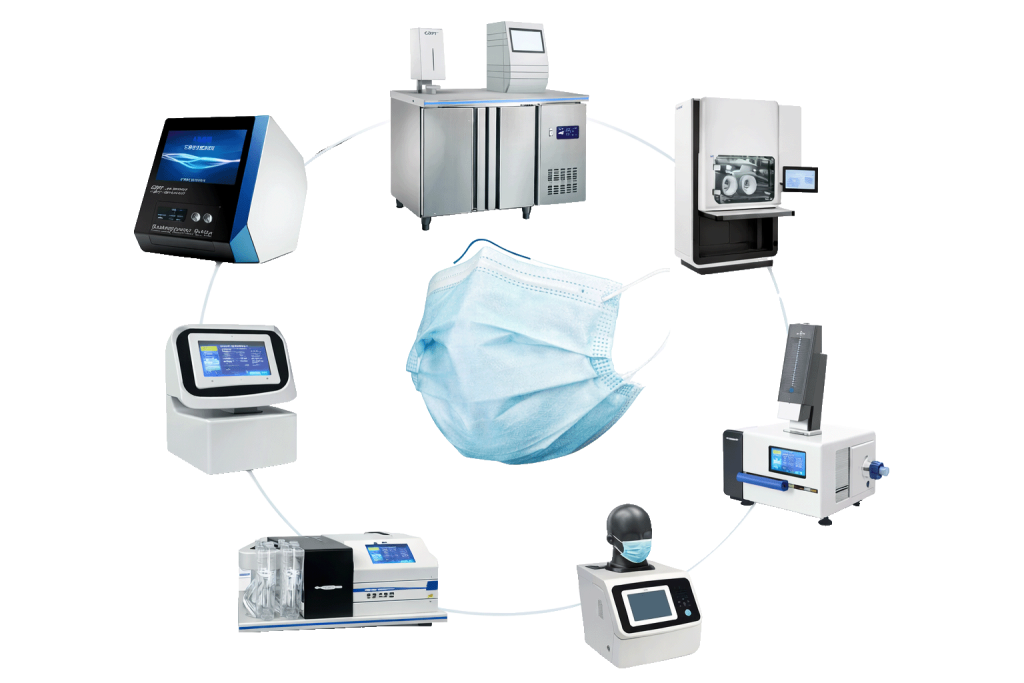
Medical masks are in direct contact with the respiratory system and facial skin. Any deficiency in design, raw materials, or manufacturing processes may lead to reduced protection, breathing discomfort, or even increased risk of contamination. Medical Mask Testing identifies and controls these risks by simulating real conditions of use.
The main objectives of Medical Mask Testing include
- Evaluating the mask’s ability to block bacteria and airborne particles
- Assessing breathing comfort during prolonged use
- Controlling microbial contamination prior to use
- Verifying resistance to liquid splashes
- Confirming the quality and integrity of mask materials and layers
Bacterial Filtration Efficiency (BFE)
One of the most critical components of Medical Mask Testing is the determination of Bacterial Filtration Efficiency (BFE). This test measures the ability of a mask to filter aerosols containing bacteria. In this method, a bacterial aerosol of defined size is passed through the mask, and the percentage of bacteria penetrating the mask is quantified.
A high BFE value indicates effective performance in preventing the transmission of infectious agents and is a key criterion in the classification of medical masks.
Breathability and Differential Pressure
Breathability is a major factor influencing user compliance and comfort. Medical Mask Testing evaluates breathability by measuring the differential pressure across the mask while air flows through it.
Excessive breathing resistance may cause discomfort, fatigue, or intolerance during extended wear. Therefore, Medical Mask Testing aims to achieve an optimal balance between high filtration efficiency and acceptable airflow resistance.
Resistance to Liquid Splash
In certain applications, particularly in clinical and surgical settings, medical masks must provide resistance against splashes of blood or bodily fluids. Medical Mask Testing assesses the ability of the mask to prevent liquid penetration under controlled pressure conditions.
This test is especially important in high-risk environments, as liquid penetration can create a direct pathway for infectious agents to reach the user.
Medical Mask Testing also includes evaluation of the microbial load (bioburden) present on the mask before use. This test determines the number of viable microorganisms on the product surface.
An elevated bioburden may indicate contamination originating from raw materials, manufacturing environments, or packaging processes. Controlling this parameter ensures that the mask itself does not become a source of microbial exposure.
Material Quality and Structural Integrity
Medical Mask Testing examines the quality and integrity of mask components, including the filtration layer, outer and inner layers, ear loops, and nose clip. Uniformity of the filter layer, mechanical strength of attachments, and proper fit all contribute to overall performance.
Defects in any of these components may lead to air leakage around the mask edges or reduced filtration efficiency, even if laboratory filtration results appear satisfactory.
Performance-Based Classification of Medical Masks
Based on the results of Medical Mask Testing, masks are classified into different performance categories. This classification helps healthcare providers and users select appropriate masks according to the level of risk in the intended environment, ranging from general use to high-risk clinical applications.
Conclusion
Medical Mask Testing is a comprehensive and multidimensional process that evaluates all critical aspects of mask performance, safety, and hygiene. These tests ensure that medical masks provide not only physical coverage but also scientifically verified protection.
Filtration efficiency, breathability, splash resistance, microbial cleanliness, and material quality are all integral elements of Medical Mask Testing. Proper implementation of these evaluations plays a vital role in reducing disease transmission, protecting public health, and strengthening confidence in medical protective products.



 Persian
  English
  Arabic